
This guide contains affiliate links. If you book through them I may earn a small commission at no extra cost to you. I only recommend things I have used myself.
In Vietnam, a lot of the best meals happen around a table. Sometimes that table is a plastic stool on a busy pavement with scooters squeezing past, and sometimes it’s a family meal with half a dozen dishes in the middle for everyone to share. Either way, Vietnamese food is a reason to go all on its own.
The cooking is fresh and comforting at once: piles of herbs, fragrant broths, meat grilled over charcoal, crisp baguettes and seriously strong coffee, often several of them in the same meal. These are the dishes to try first, with the places I ate them in Hanoi, plus how street food works when you don’t speak a word of Vietnamese.
Vietnamese dishes to try
01
Pho, for breakfast
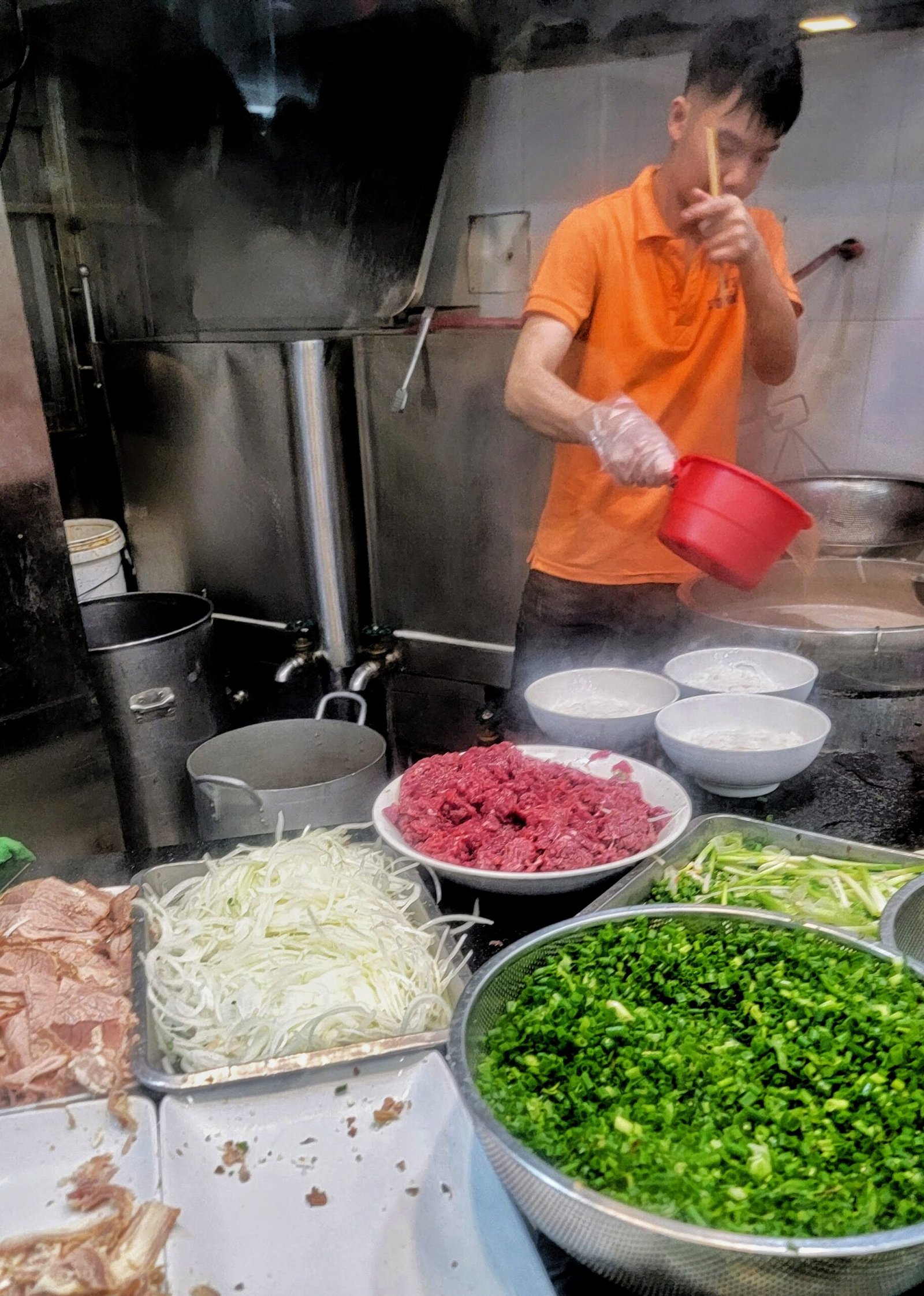
Pho isn’t just a lunch or dinner order in Vietnam. It’s a classic breakfast, eaten as the streets wake up: rice noodles in a clear, slow-cooked broth with beef or chicken, and a plate of herbs, lime and chilli on the side so you can season it yourself.
My favourite bowl was at Phở 10 Lý Quốc Sư in Hanoi, a Michelin Bib Gourmand pick where the special cost me 90,000 VND (about £2.70). I only waited five minutes, but by the time I left the queue stretched halfway down the street. There’s more on it in my guide to things to do in Hanoi.

02
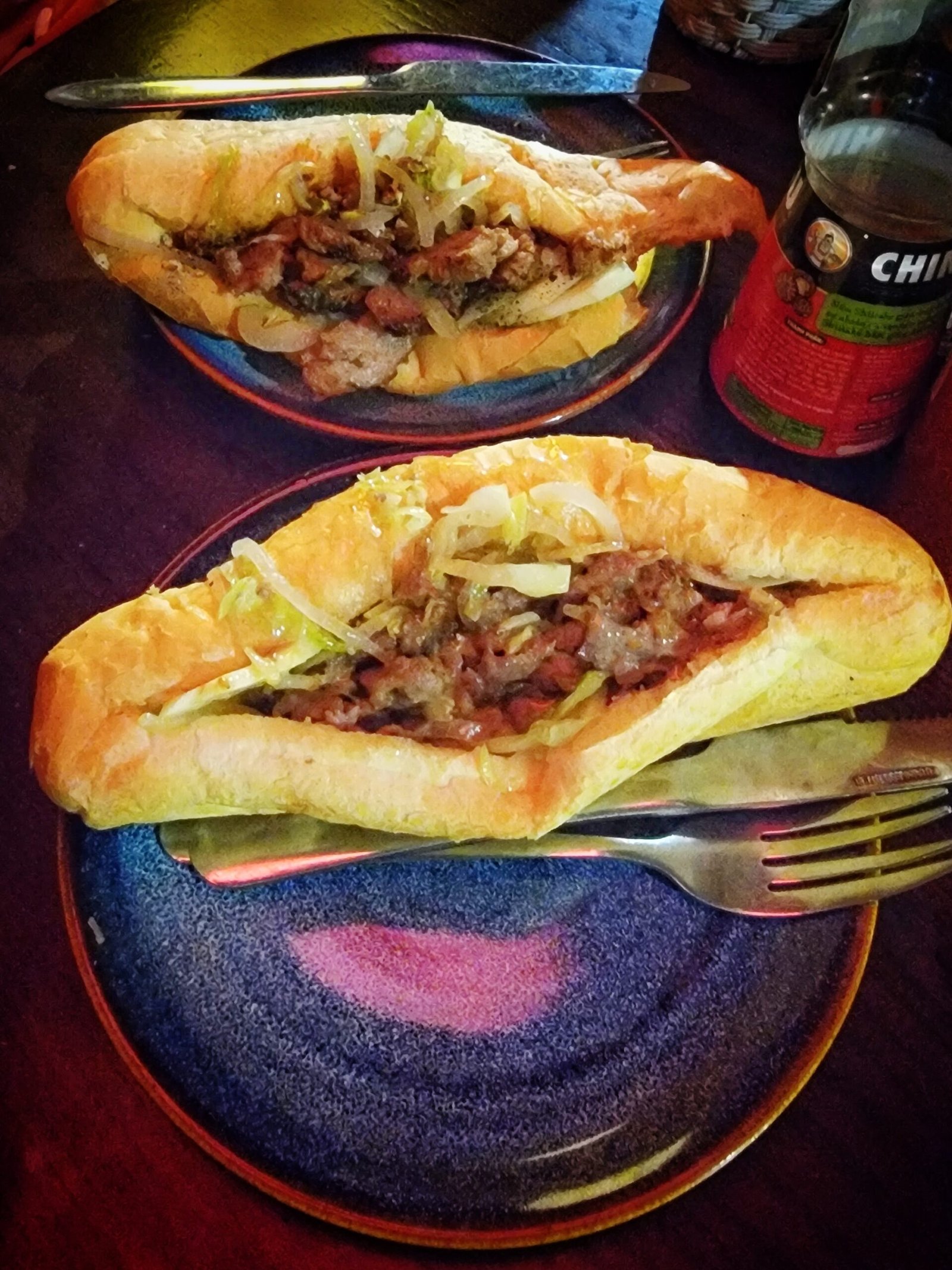
Bánh mì
The crisp baguette sandwich is a leftover of French colonial rule, but the filling is entirely Vietnamese: pork or pâté, pickled carrot and daikon, chilli and a handful of fresh coriander. It’s cheap, it’s everywhere and it travels well, which makes it the obvious thing to grab between sights.
03
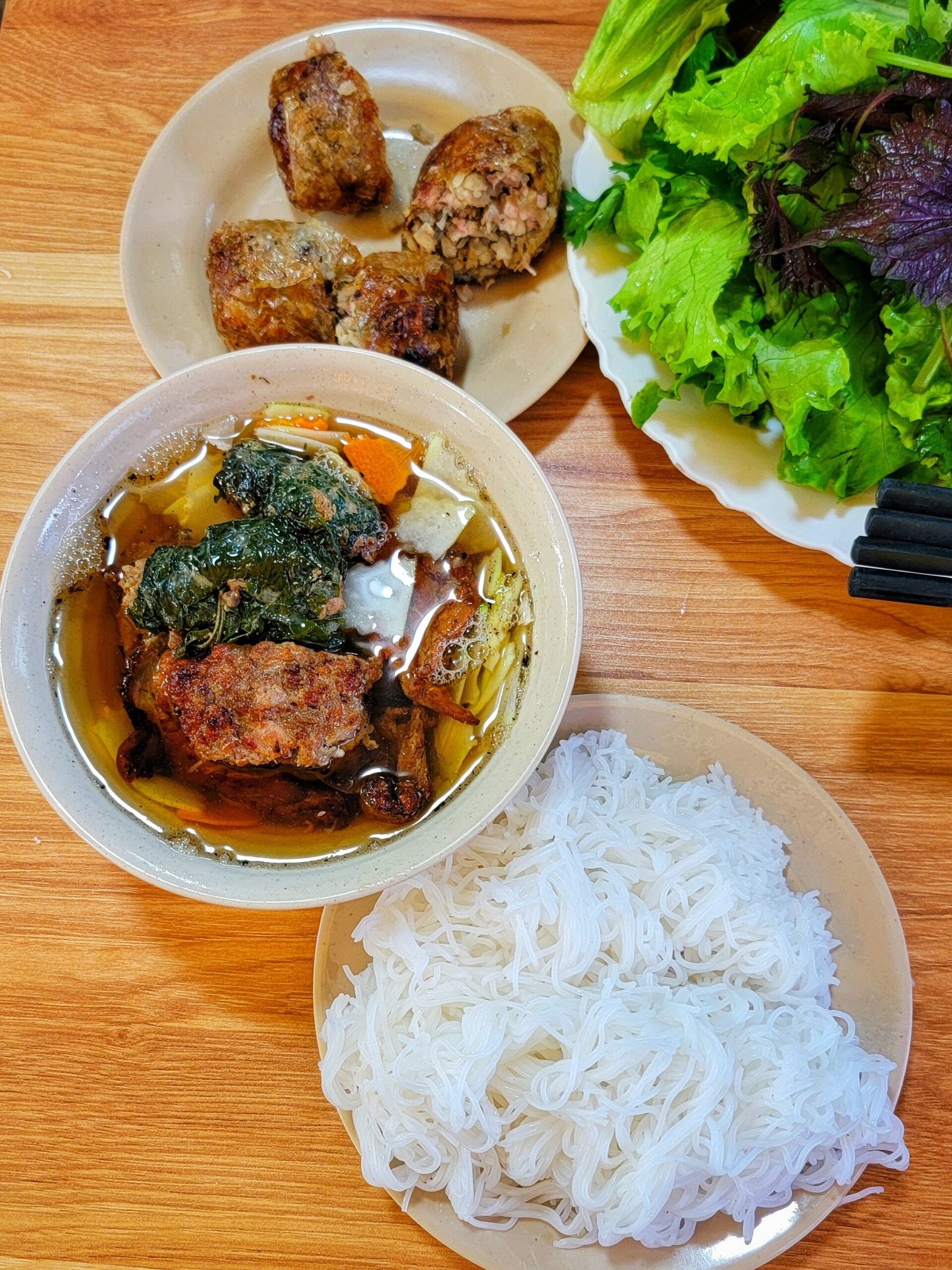
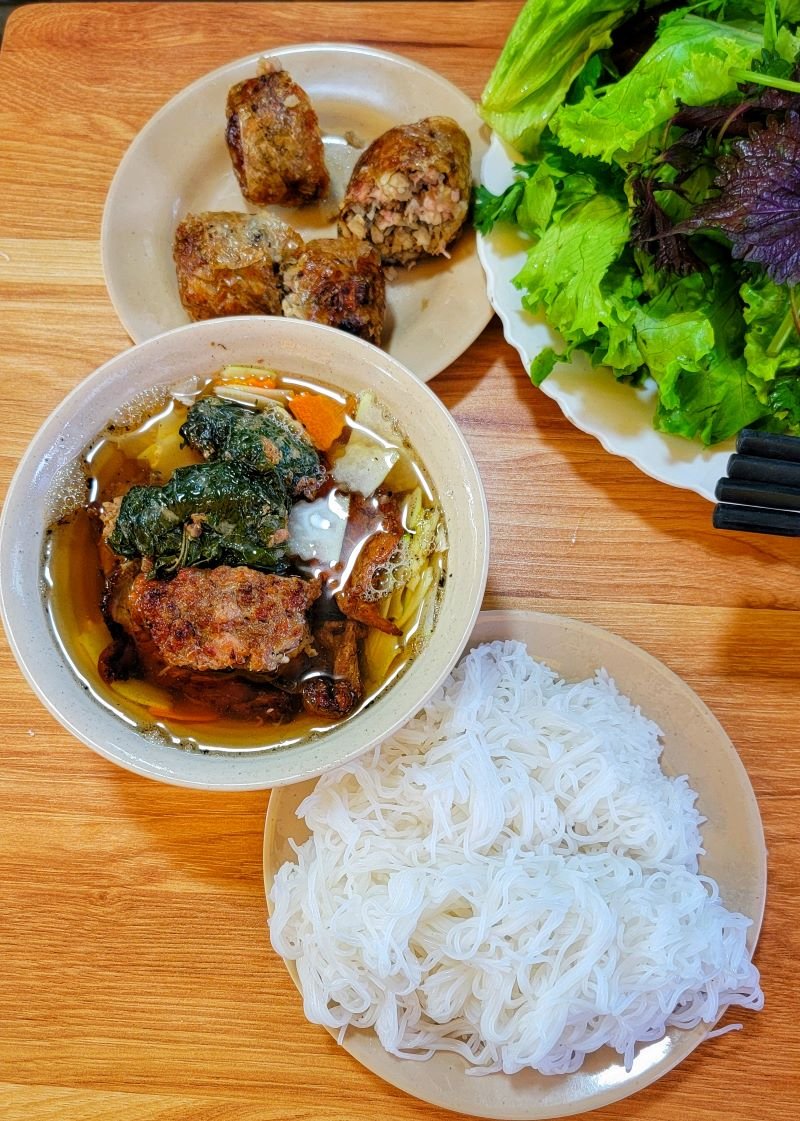
Bún chả
Hanoi’s lunchtime dish: grilled pork patties and pork belly in a warm, slightly sweet dipping broth, with cold rice noodles and herbs on the side that you dunk as you go. It became famous abroad when Anthony Bourdain and Barack Obama ate it together in Hanoi, and it’s one of my favourite things to eat anywhere.
04
Bún bò Nam Bộ
A noodle bowl without the soup you might expect. Stir-fried beef sits on rice noodles with herbs, roasted peanuts and crispy shallots, and a little sweet, sharp sauce is poured over the top. The name points south, but it’s very much a Hanoi favourite.
One of the best things about Vietnamese food is how much it changes as you travel. The north, the centre and the south each have their own ingredients, specialities and ideas about flavour, so the pho you eat in Hanoi won’t taste like the bowl you get in Ho Chi Minh City.
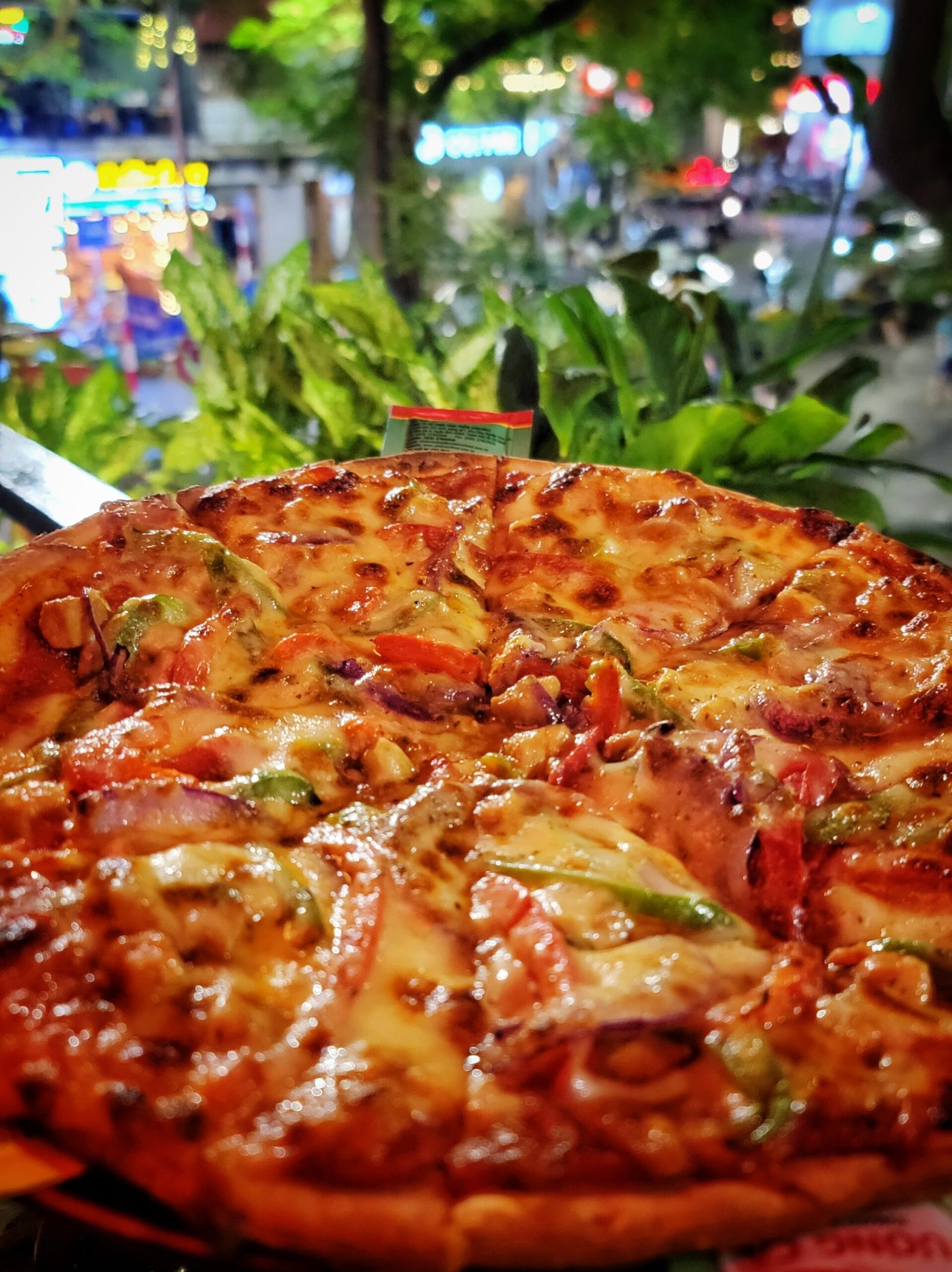
The local flavours get into everything, even the pizza. The one I had in Vietnam was a pizza in every way except the toppings, which were all Vietnamese. Call it a Vietnamese pizza.
Fresh herbs and big flavours
Vietnamese cooking is built on balance. Sweet, sour, salty, bitter and savoury all turn up together, often in dishes that look simple. Mint, Thai basil, coriander, lime and chilli bring them to life, and fish sauce gives them depth.
Rice is in almost everything, from noodles and pancakes to steamed rice and the soft rice-paper rolls you dip in peanut or fish sauce. With thousands of kilometres of coastline, seafood is a big part of the food too.
Vietnamese coffee and egg coffee
Vietnam takes its coffee seriously. The traditional way is to brew it slowly through a small metal filter called a phin, straight into a glass, which makes a strong, rich coffee usually served with sweetened condensed milk, hot or over ice.
Hanoi also has cà phê trứng, egg coffee: coffee topped with egg yolk whipped with sugar until it’s thick and creamy, closer to a dessert than a drink. It was invented in Hanoi when milk was scarce, and Café Giang, run by the family of the man who created it, is the famous place to try it. Have it at least once.

Street food in Vietnam: how it works
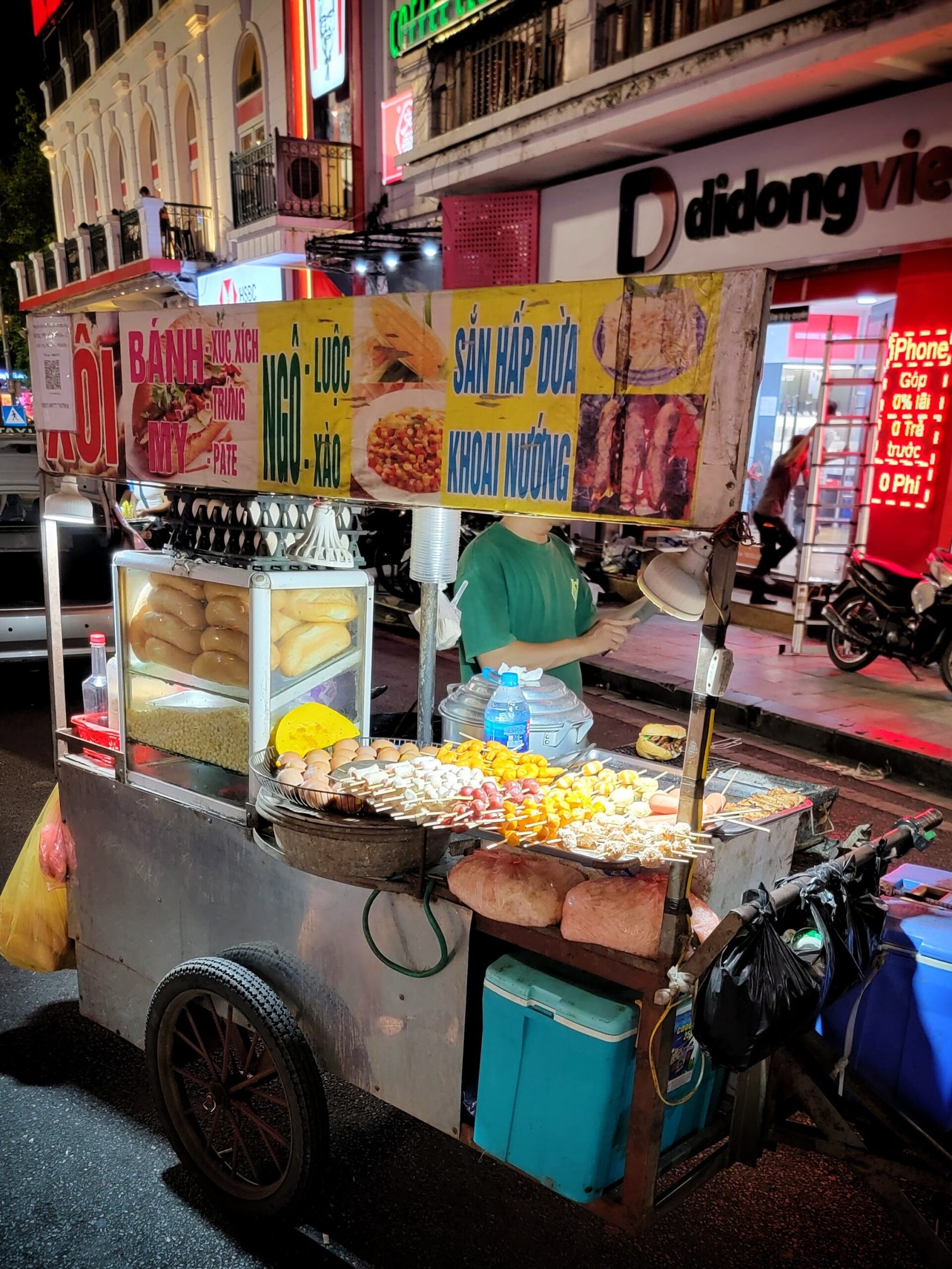
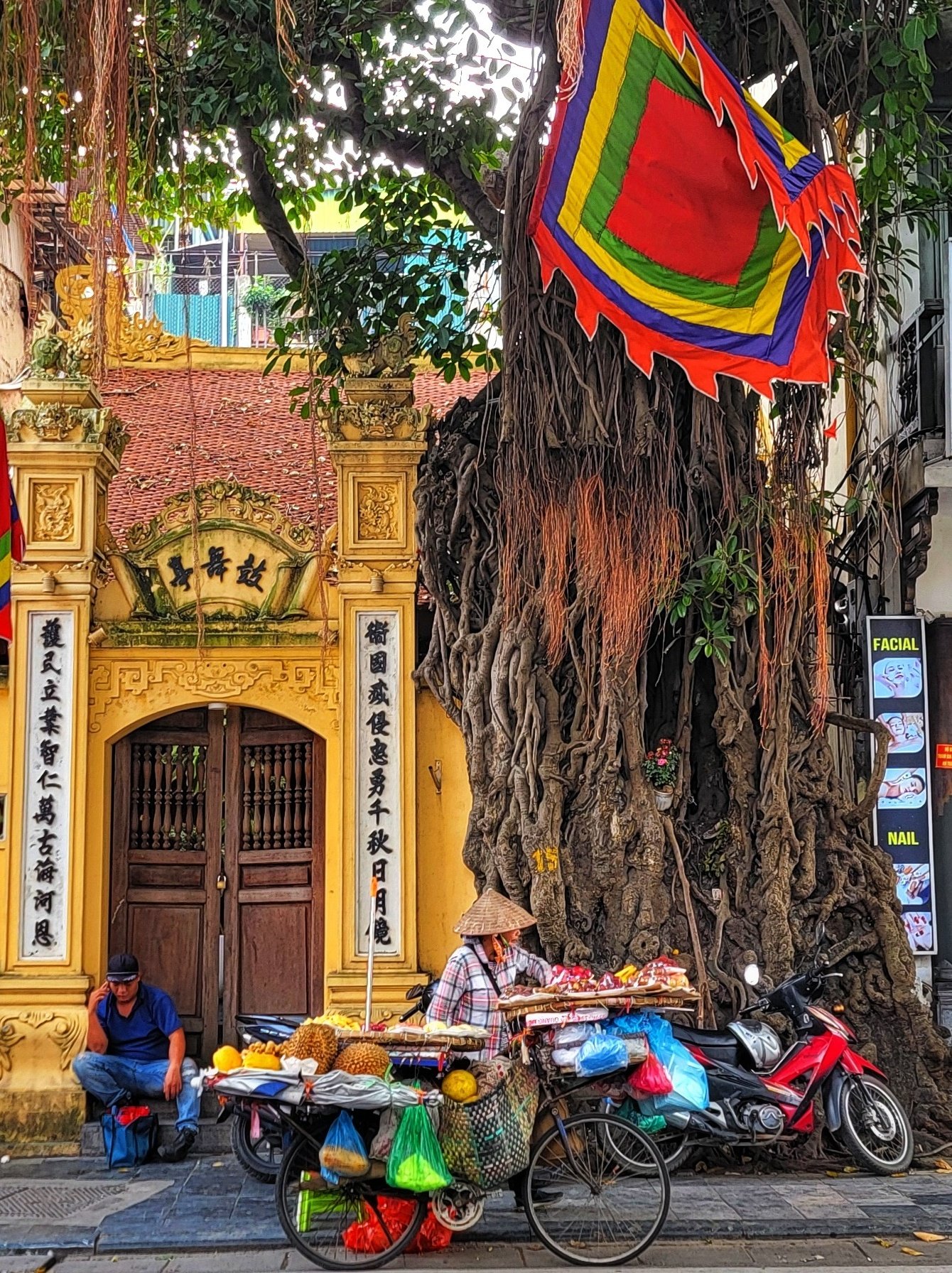
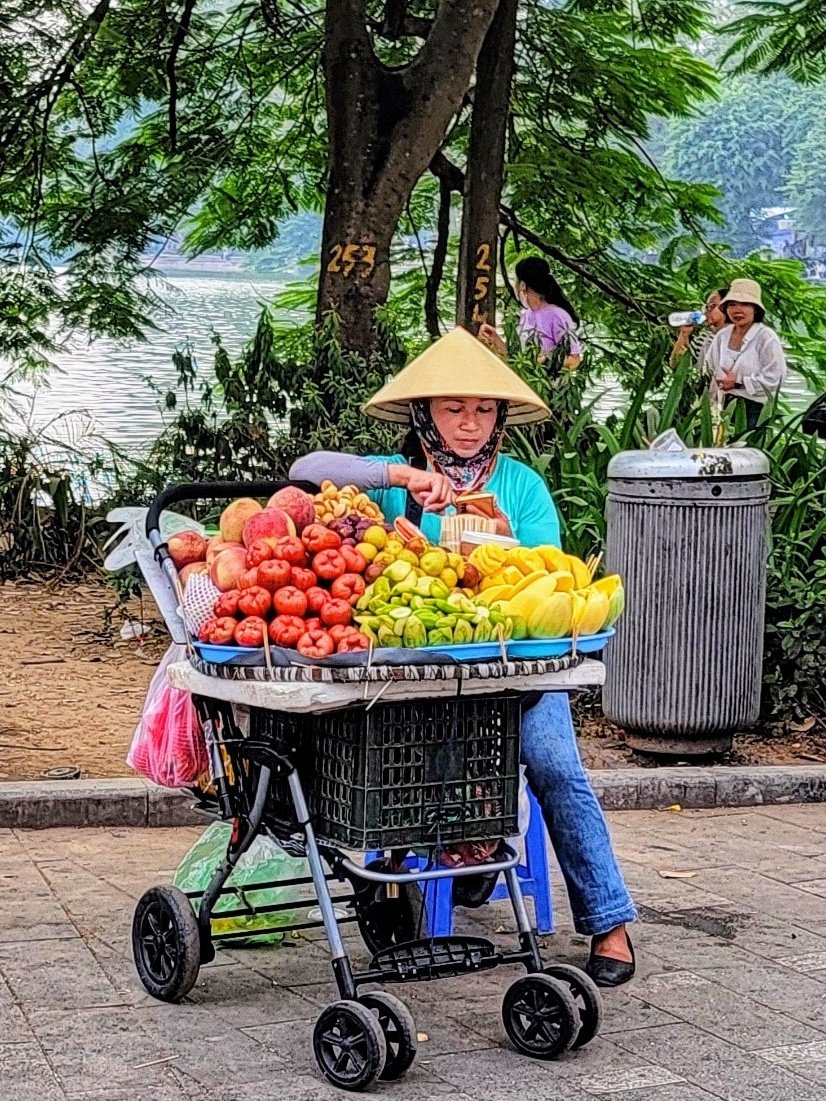
You don’t need an expensive restaurant to eat well in Vietnam. Most stalls cook one or two dishes and do them very well, so the busiest stall on the street is usually the right choice. Pull up a stool, point at what the people next to you are eating, and you’ll be fine.
Many stall owners speak little or no English, so Google Translate or pointing at the pictures works better than guessing. It’s cash only, so carry small notes, and if a stall is only open at breakfast or after dark, that’s the time to go.
Vietnamese food FAQs
What is the most famous food in Vietnam?
Pho is the dish most people know, followed by bánh mì and fresh rice-paper rolls. In Hanoi, bún chả is just as much of a local favourite.
Is street food in Vietnam safe to eat?
Generally, yes. Choose busy stalls where the food is cooked in front of you and turns over quickly, and stick to bottled water.
What is egg coffee made of?
Strong Vietnamese coffee topped with egg yolk whipped with sugar (and often condensed milk) until it’s thick and creamy. It comes from Hanoi.
15 facts about Vietnamese food
There’s far more to Vietnamese food than pho and spring rolls, from regional specialities to the way family meals are shared. Here are 15 things you might not know.
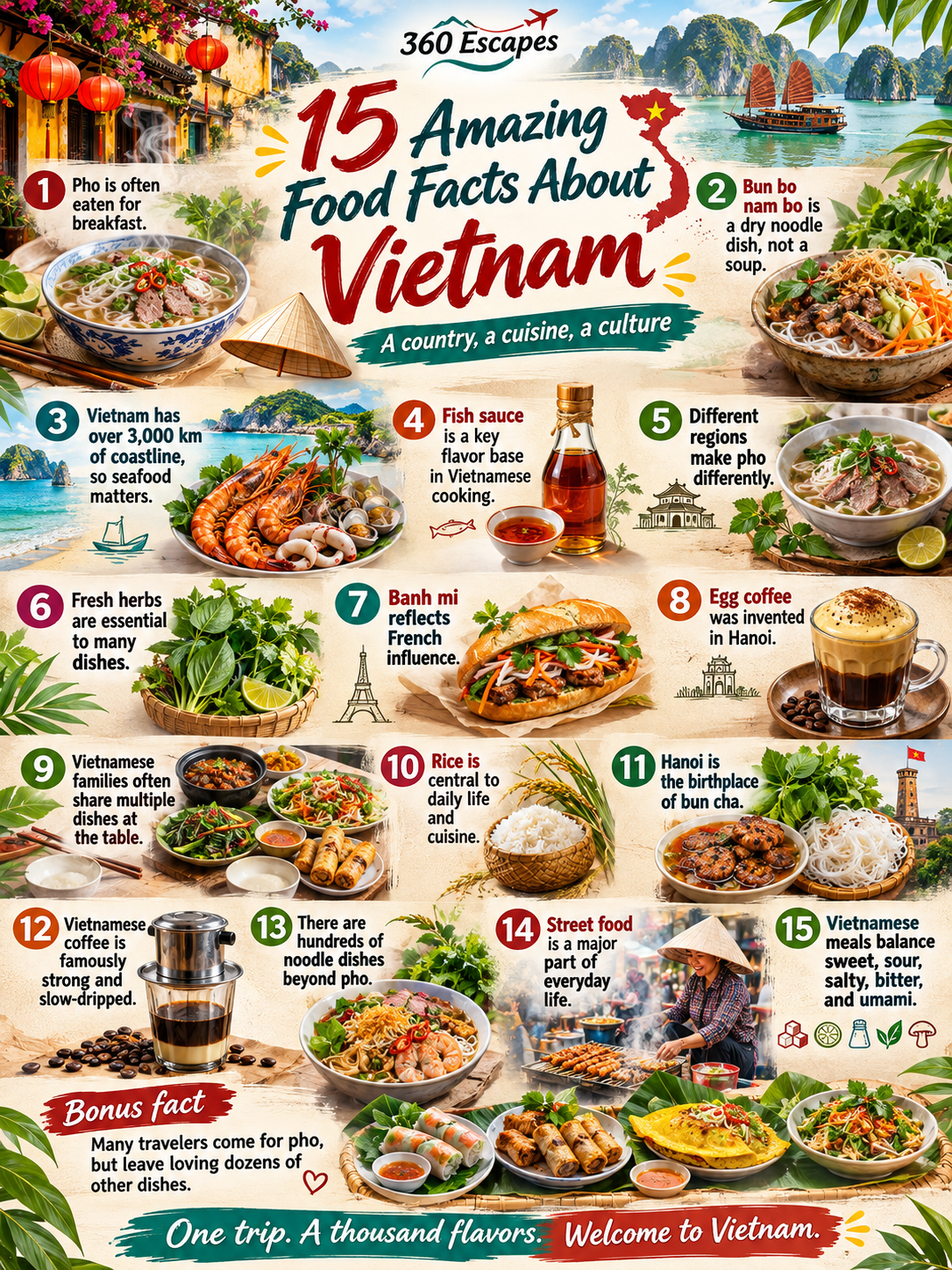
Read the 15 facts as text
- Pho is traditionally eaten for breakfast.
- Bún bò Nam Bộ is a dry noodle dish, not a soup.
- Vietnam’s long coastline makes seafood an important part of the diet.
- Fish sauce is a basic ingredient in many dishes.
- Pho changes from region to region, in how it’s made and what goes in it.
- Fresh herbs are essential to Vietnamese cooking.
- Bánh mì shows the French influence on the food.
- Egg coffee was invented in Hanoi.
- Meals are usually shared, with several dishes in the middle of the table.
- Rice is a staple of everyday meals.
- Hanoi is known for bún chả.
- Vietnamese coffee is strong and slowly dripped through a phin filter.
- There are many noodle dishes beyond pho.
- Street food is a central part of the culture.
- Vietnamese meals balance sweet, sour, salty, bitter and savoury flavours.
Some of the most memorable food in Vietnam is found on a busy street corner, on a plastic stool, in front of a bowl of something you can’t pronounce. Be willing to order something you’ve never heard of, because exploring Vietnam is as much about what you eat as where you go.
Heading to the capital? My guide to things to do in Hanoi covers where I stayed and where to eat in the Old Quarter, and you can escape the city on a day trip to Ninh Binh.